
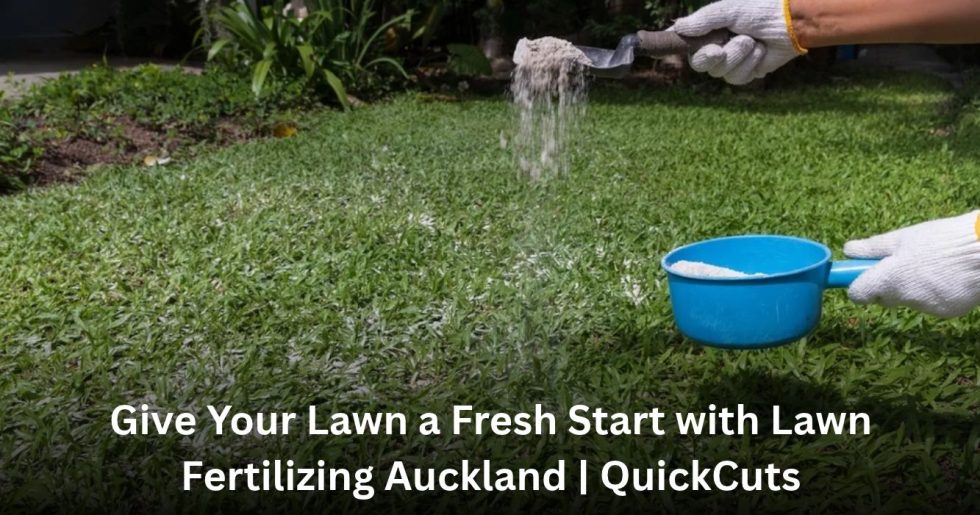
A healthy lawn can make a big difference to the appearance of your property. It creates a welcoming outdoor space, improves the look of your garden, and gives families, visitors, and customers a pleasant area to enjoy. However, keeping grass green, thick, and healthy throughout the year takes more than regular mowing.
Over time, lawns use nutrients from the soil. Rainfall, frequent mowing, foot traffic, weeds, and changing weather conditions can also affect grass growth. When the soil cannot provide enough nutrients, the lawn may start looking pale, thin, patchy, or slow to recover.
This is where lawn fertilizing becomes an important part of lawn care.
Applying the right fertilizer at the right time can help grass develop stronger roots, maintain healthy growth, and recover from everyday stress. However, applying too much fertilizer or choosing the wrong product can create additional problems.
For Auckland homeowners and property managers, understanding local lawn conditions is especially important. Different grass varieties, soil types, drainage conditions, and seasonal weather patterns all influence how a lawn should be treated.
In this guide, QuickCuts explains how lawn fertilizing works, when your lawn may need feeding, common mistakes to avoid, and how professional lawn care can help maintain a healthier outdoor space.
What Is Lawn Fertilizing and Why Does Your Grass Need It?
Quick Answer: Lawn fertilizing is the process of adding essential nutrients to the soil to support healthy grass growth. A suitable fertilizer helps provide nutrients that grass may not receive in sufficient quantities from the existing soil.
Grass needs nutrients to grow, develop roots, maintain colour, and recover from regular mowing and environmental stress. While soil naturally contains some nutrients, these can become limited as grass continues to grow.
A lawn fertilizer usually contains three major nutrients:
| Nutrient | Main purpose |
| Nitrogen (N) | Supports leaf growth and green colour |
| Phosphorus (P) | Supports root development and early plant establishment |
| Potassium (K) | Helps support overall plant health and stress tolerance |
These nutrients are often shown as an N-P-K ratio on fertilizer packaging.
For example, a fertilizer with a higher nitrogen proportion is generally designed to support leafy growth. However, this does not mean every lawn needs a high-nitrogen product.
The right fertilizer depends on the condition of the grass, soil nutrient levels, season, and intended results.
In simple terms: Fertilizer supplies nutrients that help grass grow properly. It supports good lawn care, but it cannot replace suitable mowing, watering, soil management, and weed control.
Why Lawn Fertilizing Matters for Auckland Properties
Auckland’s climate creates favorable growing conditions for many lawn varieties. However, periods of heavy rain, warm temperatures, dry spells, and regular outdoor use can put pressure on grass.
A lawn may look healthy one month and start losing colour or density the next. Sometimes the issue is related to nutrient availability. In other cases, poor drainage, compacted soil, pests, disease, or unsuitable mowing practices may be responsible.
Understanding the difference is important before choosing a treatment.
1. Supports consistent grass growth
Grass needs nutrients to produce new leaves and maintain its existing growth. When essential nutrients are limited, the lawn may become thin or lose its usual colour.
A suitable feeding programme can help maintain more consistent growth when combined with appropriate mowing and soil care.
2. Helps maintain a greener appearance
Nitrogen plays an important role in chlorophyll production, which gives grass its green colour.
When nitrogen is deficient, grass may appear pale or yellowish. However, yellow grass does not always indicate a nutrient deficiency. Waterlogging, drought, disease, and other problems can produce similar symptoms.
A proper assessment helps avoid applying fertilizer when another treatment is needed.
3. Supports stronger root development
Healthy roots help grass access water and nutrients from the soil.
Phosphorus is important for root development, particularly during establishment, but existing lawns do not automatically need extra phosphorus. A soil test can help identify whether additional nutrients are necessary.
4. Helps lawns recover from regular use
Family lawns, rental properties, and commercial outdoor spaces often experience regular foot traffic.
Over time, repeated use can compact the soil and damage grass. Appropriate nutrition can support recovery, but heavily compacted areas may also need aeration and other soil improvements.
5. Improves the results of an overall lawn care programme
Fertilizing works best when it is part of a broader maintenance plan.
Healthy grass benefits from:
- Regular mowing at a suitable height.
- Correct watering practices.
- Weed monitoring and control.
- Soil condition management.
- Appropriate seasonal feeding.
- Timely treatment of lawn problems.
Key takeaway: Fertilizer supports lawn health, but the best results come from treating the lawn as a complete growing system rather than relying on one product.
How to Know When Your Lawn Needs Fertilizer
Not every lawn needs feeding at the same time. The condition of the grass and soil should guide the decision.
Look for the following signs:
Pale or yellowing grass
Grass that has lost its usual green colour may be experiencing nutrient deficiency. Nitrogen deficiency is one possible cause, but drainage, moisture, disease, and other issues should also be considered.
Slow or uneven growth
If some sections grow well while others remain thin, the problem may be linked to uneven soil conditions, shade, compaction, or differences in nutrient availability.
Thin patches and reduced density
A lawn that struggles to fill bare areas may need more than fertilizer. Soil preparation, suitable grass varieties, watering, and correct mowing can all influence recovery.
Grass showing signs of stress
Heat, dry weather, waterlogging, and heavy foot traffic can weaken grass. Fertilizing a stressed lawn without understanding the cause may make the situation worse.
Quick Answer: Pale colour, slow growth, and thinning can indicate that a lawn needs attention. However, these signs do not prove that fertilizer is required. Check soil moisture, drainage, mowing practices, and possible disease before choosing a treatment.
Choosing the Right Lawn Fertilizer in Auckland
Choosing lawn fertilizer is not simply about finding the product with the highest nutrient content. The best option is the one that suits the lawn’s actual requirements.
Granular lawn fertilizer
Granular products are commonly applied using a fertilizer spreader.
They can be useful for covering larger lawn areas evenly. Some release nutrients quickly, while controlled-release products are designed to supply nutrients over a longer period.
Even distribution matters. Applying too much in one area can cause grass damage, while missed sections may receive little benefit.
Liquid lawn fertilizer
Liquid fertilizers are applied after being diluted or prepared according to the product instructions.
They can be useful for targeted applications and are often used in lawn care programmes. Application rates, coverage, and weather conditions still need careful attention.
Slow-release fertilizer
Slow-release products release nutrients over a longer period rather than supplying them all at once.
This can help provide more gradual feeding and reduce the risk of excessive growth when used correctly. Release rates vary according to the product, temperature, moisture, and other conditions.
Organic lawn fertilizer
Organic fertilizers may contain plant-based or animal-derived materials and can contribute organic matter as they break down.
They are not automatically suitable for every lawn or situation. Nutrient content, release rate, product quality, and application instructions should all be considered.
Which fertilizer should you choose?
Before selecting a lawn fertilizer, consider:
- The grass variety and current condition.
- Whether the lawn has a known nutrient deficiency.
- Soil pH and nutrient availability.
- The season and expected weather.
- The product’s nutrient ratio and release characteristics.
- The manufacturer’s application and safety instructions.
A soil test can be particularly helpful when a lawn repeatedly struggles despite regular maintenance.
When Is the Best Time for Lawn Fertilizing in Auckland?
Timing matters because grass growth changes with temperature, moisture, and seasonal conditions.
Auckland lawns can have different feeding requirements depending on whether they contain warm-season or cool-season grass varieties.
Spring: Support active growth
Spring often brings increased grass growth as temperatures rise. If the lawn needs nutrients, an appropriate spring feeding programme can support healthy development.
Before applying fertilizer, check whether the soil is suitable and whether the grass is actively growing.
Summer: Avoid unnecessary stress
During warmer weather, lawns may face dry conditions and heat stress.
Avoid applying fertilizer to severely drought-stressed grass unless the product specifically supports that use. Water availability and correct mowing height are important considerations during this period.
Autumn: Prepare for changing conditions
Autumn can provide opportunities to support lawn recovery after summer use and stress.
The appropriate fertilizer depends on grass type and soil conditions. Avoid feeding simply because the calendar says it is time.
Winter: Be guided by grass growth
Some lawns slow down significantly during colder periods. Fertilizer applied when grass is not actively using nutrients may be less effective and can increase nutrient losses.
Consider the actual grass variety and growing conditions before deciding whether winter feeding is appropriate.
Expert insight: In Auckland, seasonal timing should be based on the lawn’s growth and condition rather than following one fixed fertilizing schedule for every property.
How Professional Lawn Fertilizing Services Auckland Work
Professional lawn feeding involves more than spreading fertilizer across the grass. A suitable treatment starts with understanding what the lawn needs.
A professional lawn treatment process may include the following stages.
Step 1: Inspect the lawn
The lawn is checked for colour changes, thin areas, weeds, soil conditions, drainage issues, and visible signs of stress.
This helps identify whether fertilizer is likely to help or whether another problem needs attention first.
Step 2: Understand the soil requirements
Soil condition affects how nutrients are stored and absorbed.
Where necessary, soil testing can help identify nutrient levels and pH. This is particularly useful when grass repeatedly shows poor growth or when the lawn has a history of unsuccessful treatments.
Step 3: Select a suitable fertilizer
The product should match the grass type, lawn condition, and nutrient requirements.
A suitable application rate is just as important as product selection. More fertilizer does not mean better results.
Step 4: Apply fertilizer evenly
Granular fertilizer is commonly applied with a calibrated spreader to help achieve consistent coverage.
The lawn should be prepared according to the product instructions. Avoid applying during unsuitable weather or when heavy rainfall is expected if there is a risk of runoff.
Step 5: Follow aftercare instructions
Some fertilizers need watering after application, while others have different requirements.
Always follow the label instructions, including any watering, re-entry, and safety guidance. Keep children and pets away from treated areas for the period specified by the manufacturer.
Step 6: Monitor the results
Grass does not change overnight. Monitor colour, growth, density, and general condition over the following weeks.
If the lawn continues to struggle, investigate other causes rather than repeatedly applying fertilizer.
Common Lawn Fertilizing Mistakes That Can Damage Your Grass
Even a good fertilizer can cause problems when applied incorrectly. These mistakes are common among homeowners trying to improve their lawns quickly.
1. Applying too much fertilizer
Excessive fertilizer can burn grass, create uneven growth, and increase the risk of nutrient runoff.
Always measure the lawn area and follow the recommended application rate. Never assume that doubling the amount will double the results.
2. Fertilizing during unsuitable weather
Applying fertilizer to drought-stressed grass or immediately before heavy rainfall can create problems.
Check the forecast and product instructions. Avoid conditions that could cause fertilizer to wash away or become concentrated in certain areas.
3. Ignoring soil pH
Soil pH influences how easily grass can access certain nutrients.
If the soil is too acidic or alkaline, adding more fertilizer may not solve the underlying problem. A soil test can help determine whether pH correction is needed.
4. Using the wrong product
A fertilizer designed for a different plant or purpose may not provide the right nutrient balance for your lawn.
Check that the product is suitable for the grass type and intended application.
5. Mowing too short
Cutting grass too low can weaken it and expose the soil to greater heat and moisture loss.
Maintain an appropriate mowing height for the grass variety. Avoid removing too much leaf growth in one session.
6. Expecting fertilizer to fix every lawn problem
Fertilizer will not repair poor drainage, eliminate established weeds, resolve pest damage, or reverse severe compaction on its own.
Identify the cause before choosing the treatment.
Practical Tips for Getting Better Lawn Fertilizing Results
A healthier lawn usually comes from consistent care rather than occasional heavy treatments.
Use these practical steps to improve your lawn care routine.
Mow at the right height
Different grass varieties have different ideal cutting heights. Avoid scalping the lawn, especially during hot or dry periods.
Sharp mower blades also help create cleaner cuts and reduce unnecessary damage to grass leaves.
Water according to conditions
Watering needs depend on rainfall, soil type, grass variety, and weather.
Where watering is required, aim to moisten the root zone rather than lightly wetting the surface every day. Avoid excessive watering, which can contribute to waterlogging and shallow rooting.
Aerate compacted soil where appropriate
Compacted soil restricts the movement of air, water, and nutrients.
Aeration can help relieve compaction by creating openings in the soil. It is particularly useful in lawns exposed to regular foot traffic, although the right method and timing depend on the grass type and soil condition.
Manage weeds before they take over
Weeds compete with grass for light, moisture, and nutrients.
Regular monitoring helps identify problems early. Choose control methods carefully and consider the safety of children, pets, and surrounding plants when using herbicides.
Keep a simple lawn care record
Record when the lawn was fertilized, which product was used, the application rate, and how the grass responded.
This makes it easier to avoid unnecessary repeat applications and understand what works for your property.
Quick checklist for a healthier lawn:
- Check the grass condition before fertilizing.
- Use a fertilizer suited to the lawn.
- Measure the application area accurately.
- Follow the product label.
- Avoid unsuitable weather conditions.
- Maintain appropriate mowing and watering.
- Monitor results before applying another treatment.
Why Lawn Fertilizing Should Be Part of Complete Garden Maintenance
A lawn does not exist separately from the rest of the garden. Its health and appearance are influenced by nearby trees, garden beds, drainage, soil conditions, and regular maintenance.
For example, a lawn beneath large trees may receive less sunlight and compete with tree roots for water and nutrients. Applying extra fertilizer may not resolve the issue if the grass is simply unsuitable for the shaded conditions.
Similarly, grass growing beside neglected garden beds may become overrun by weeds or unwanted vegetation.
A complete outdoor maintenance approach considers:
- Lawn mowing and edging.
- Fertilizer and soil treatments where needed.
- Hedge trimming and pruning.
- Weed removal and garden-bed care.
- Tree maintenance and suitable canopy management.
- Drainage and access improvements.
- Seasonal garden clean-ups.
For Auckland homeowners, combining these services can help create a more consistent and manageable outdoor environment.
Explore QuickCuts lawn, yard and garden services for related outdoor maintenance options.
Lawn Fertilizing for Homes, Rental Properties and Businesses
Different properties have different lawn care requirements.
Residential lawns
Family lawns often need to handle children playing, pets, outdoor activities, and regular foot traffic. A suitable maintenance programme should balance appearance with durability.
Rental properties
Landlords and property managers often need outdoor spaces that remain tidy between inspections and tenancies.
Regular mowing, weed control, and appropriate lawn treatments can help maintain a presentable property.
Commercial properties
Businesses benefit from clean, well-maintained outdoor areas that create a positive first impression.
Consistent lawn care can help maintain entrances, roadside sections, shared outdoor spaces, and landscaped grounds.
In every case, fertilizer selection should reflect the actual condition and use of the lawn rather than relying on a standard treatment for all properties.
QuickCuts: Supporting Healthier Lawns Across Auckland
Maintaining a healthy lawn takes a combination of suitable treatments, regular attention, and an understanding of local growing conditions.
QuickCuts helps homeowners, property owners, and businesses look after their outdoor spaces through lawn mowing, landscaping, garden maintenance, and tree care services.
A well-maintained lawn may need more than fertilizer. Depending on its condition, it may also benefit from regular mowing, edging, weed management, soil improvement, or a wider garden clean-up.
QuickCuts can help property owners consider the practical maintenance work needed to keep their lawns and gardens looking tidy and usable.
Whether you are managing a family backyard, preparing a rental property, or maintaining a commercial outdoor area, it is worth taking a planned approach rather than waiting until the lawn becomes difficult to manage.
If your lawn is losing colour, growing unevenly, or struggling to recover, start by identifying the cause. The right maintenance approach can make a meaningful difference over time.
Visit QuickCuts to explore its Auckland lawn and garden services.
The Future of Lawn Care: Smarter Feeding and More Sustainable Practices
Lawn care is gradually moving towards more targeted and responsible treatments. Instead of applying fertilizer automatically at fixed intervals, property owners are becoming more aware of soil conditions, nutrient requirements, and environmental impact.
Some useful approaches include:
Soil-based feeding: Soil testing can help identify which nutrients are actually needed, reducing unnecessary applications.
Slow-release products: Suitable controlled-release fertilizers can provide nutrients over a longer period when used according to product instructions.
Better water management: Healthy soil, suitable drainage, and sensible watering practices can help reduce nutrient loss.
Integrated lawn care: Combining mowing, aeration, weed management, and appropriate feeding can support better long-term lawn health.
The future of lawn maintenance is not about applying more products. It is about understanding what the lawn needs and choosing the right treatment at the right time.
Conclusion: Give Your Lawn the Care It Needs to Grow Stronger
A healthy lawn is built through the right combination of nutrition, mowing, watering, soil care, and regular maintenance. Lawn fertilizing can play an important role by supplying essential nutrients, supporting grass growth, and helping maintain a greener outdoor space.
However, applying fertilizer without understanding the lawn’s condition can lead to wasted products and avoidable damage. The best results come from choosing suitable treatments, following correct application practices, and addressing problems such as compaction, drainage, and weeds.
For Auckland homeowners, landlords, property managers, and businesses, a planned approach to lawn care can make outdoor spaces easier to maintain and more enjoyable throughout the year.
QuickCuts supports property owners with professional lawn mowing, landscaping, garden maintenance, and tree care services. If your lawn needs attention, consider combining suitable lawn treatments with consistent maintenance to achieve better long-term results.
Give your lawn a fresh start with the right care, and make a healthier outdoor space part of your property.
Frequently Asked Questions About Lawn Fertilizing Auckland
1. How often should I fertilize my lawn in Auckland?
There is no single schedule for every lawn. Frequency depends on grass type, soil condition, seasonal growth, and the fertilizer used. Follow product instructions and consider soil testing before establishing a regular feeding programme.
2. What is the best lawn fertilizer for Auckland grass?
The best lawn fertilizer depends on the grass variety and its nutrient requirements. A balanced or nitrogen-focused product may suit some situations, but soil testing can help identify the correct nutrient mix.
3. When is the best time to fertilize a lawn in Auckland?
Apply fertilizer when the grass is actively growing and conditions are suitable for the selected product. Spring and autumn can be useful feeding periods for some lawns, but timing depends on grass type and weather.
4. Why is my grass turning yellow after fertilizing?
Yellow or brown grass after fertilizing may indicate overapplication, uneven spreading, fertilizer burn, or unsuitable watering. Other issues such as drought, waterlogging, and disease can also cause discoloration.
5. Can I mow my lawn after fertilizing?
It depends on the fertilizer and its application instructions. Some products require a waiting period or watering before mowing. Follow the manufacturer’s guidance to avoid removing the treatment or damaging the grass.
6. Should I hire professional lawn fertilizing services in Auckland?
Professional help can be useful when your lawn has recurring nutrient problems, uneven growth, or visible damage. A lawn care professional can assess the grass and soil conditions and recommend suitable treatments and maintenance.