
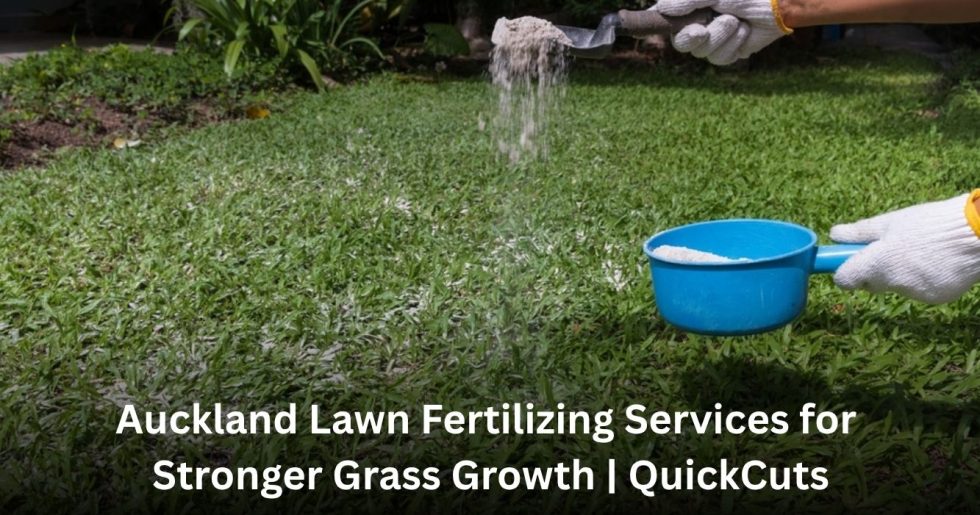
A healthy lawn does more than make a property look attractive. It creates a welcoming outdoor space, improves the overall appearance of a home or business, and provides a comfortable area for everyday activities. However, keeping grass thick, green, and healthy throughout the year can be challenging, particularly when the soil lacks essential nutrients.
In Auckland, lawns experience changing weather conditions, regular rainfall, periods of warmer temperatures, and different levels of sunlight depending on the property. These conditions influence how quickly grass grows and how effectively it absorbs nutrients. Even with regular mowing and watering, a lawn may become thin, pale, patchy, or slow to recover if its nutritional needs are not being met.
This is where professional lawn fertilizing services can make a difference.
Fertilizing supplies grass with nutrients that support healthy growth, root development, and recovery from everyday stress. When the right fertilizer is applied at the right time, it can help improve lawn condition and support a more consistent appearance.
For homeowners, landlords, property managers, and businesses, understanding proper lawn feeding is an important part of long-term outdoor maintenance.
In this guide, QuickCuts explains how lawn fertilization works, which nutrients grass needs, when to fertilize in Auckland, what mistakes to avoid, and how professional lawn care can help maintain stronger grass growth.
What Are Lawn Fertilizing Services?
Lawn fertilizing services involve assessing a lawn’s condition and applying suitable nutrients to support healthy grass growth. The process may include evaluating soil conditions, identifying visible nutrient problems, selecting an appropriate fertilizer, and applying it according to the product instructions and lawn requirements.
Fertilizer is not simply something that makes grass grow faster. It provides nutrients that grass needs to develop healthy roots, produce new growth, and maintain its ability to recover from regular use and environmental stress.
Quick Answer: Lawn fertilizing services help improve grass health by supplying essential nutrients such as nitrogen, phosphorus, and potassium. The right fertilizer, applied at an appropriate rate and time, supports stronger roots, healthier growth, and a better-looking lawn.
A professional lawn feeding programme should consider:
- The type of grass growing on the property.
- Existing lawn condition and growth rate.
- Soil nutrient levels and pH where relevant.
- Sunlight, drainage, and moisture conditions.
- Seasonal weather and temperature.
- How frequently the lawn is used.
- Previous fertilizer applications.
A lawn with poor growth may need more than fertilizer. Compacted soil, unsuitable mowing height, excessive shade, drainage problems, and pests can also affect grass health.
The goal is to identify what is limiting growth rather than applying fertilizer without understanding the problem.
Why Does Your Auckland Lawn Need Regular Nutrient Management?
Grass uses nutrients throughout its growing cycle. When the soil cannot supply enough of the nutrients the grass needs, growth may become weak or inconsistent.
A lawn can still look reasonably healthy while gradually losing density. Over time, poor nutrient availability may make it harder for grass to recover from mowing, foot traffic, or seasonal stress.
1. Supports stronger grass growth
Nitrogen is particularly important for leafy growth and the green appearance of grass. When nitrogen is deficient, grass may look pale and grow slowly.
However, applying too much nitrogen can create problems. Excessive growth may require more frequent mowing and can leave grass more vulnerable to certain diseases or environmental stress.
The right amount depends on the grass type, soil conditions, season, and product formulation.
2. Encourages healthy root development
Roots are responsible for absorbing water and nutrients from the soil. A lawn with a healthy root system is generally better equipped to access available moisture and withstand normal changes in growing conditions.
Phosphorus plays an important role in root development, although established lawns do not automatically need additional phosphorus. Soil testing can help determine whether it is required.
3. Helps grass recover from regular use
Family lawns, rental properties, and commercial outdoor spaces often experience foot traffic. Repeated use can damage grass, particularly when the soil is wet or compacted.
Appropriate nutrient management supports recovery by helping grass produce new growth when growing conditions are suitable.
4. Improves overall lawn appearance
A balanced fertilizing plan can help maintain more consistent colour and growth. It may also support better lawn density, which can help reduce opportunities for weeds to establish.
Fertilizer alone will not remove existing weeds or repair major bare patches. It should form part of a wider lawn care routine.
In simple terms: Fertilizer provides nutrients that help grass grow, but good results depend on healthy soil, suitable mowing, proper watering, and the right growing conditions.
Understanding the Main Nutrients in Lawn Fertilizer
Choosing a lawn fertilizer becomes easier when you understand what its main nutrients do.
Most conventional fertilizers display three numbers on the packaging. These represent the percentage of nitrogen (N), phosphorus (P), and potassium (K).
Nitrogen (N): Supports green leafy growth
Nitrogen helps grass produce leaves and maintain a healthy green colour. It is one of the most important nutrients for actively growing lawns.
Too little nitrogen can result in pale, slow-growing grass. Too much can lead to excessive growth, increased mowing requirements, and possible stress.
Phosphorus (P): Supports root development
Phosphorus helps plants develop roots and supports important growth processes.
It is especially relevant when establishing new grass in soils where phosphorus is deficient. However, unnecessary phosphorus application should be avoided because excess nutrients can contribute to environmental problems.
Potassium (K): Helps overall plant function
Potassium supports water regulation, nutrient movement, and several processes involved in plant health.
It can help grass manage environmental stress, but it does not make a lawn immune to drought, disease, or poor maintenance.
Other nutrients that may matter
Depending on soil conditions, grass may also benefit from nutrients such as:
- Iron, which supports chlorophyll production and green colour.
- Magnesium, which is part of the chlorophyll molecule.
- Sulphur, which supports protein formation.
- Calcium, which contributes to cell structure.
Not every lawn needs every nutrient. A soil test is a more reliable way to identify deficiencies than choosing a fertilizer based only on its advertised benefits.
When Is the Best Time to Fertilize a Lawn in Auckland?
Auckland’s relatively mild climate allows many lawns to grow across much of the year, although growth changes with temperature, rainfall, and sunlight.
The best time to fertilize depends on the grass variety and its active growing period. Warm-season grasses and cool-season grasses do not always follow the same feeding schedule.
Quick Answer: Fertilize an Auckland lawn when the grass is actively growing and conditions are suitable for nutrient uptake. Spring and early autumn are often useful periods for many lawns, but the correct timing depends on grass type, weather, soil condition, and fertilizer instructions.
Spring: Support new seasonal growth
As temperatures rise, many lawns begin growing more actively. This can be a suitable time to assess nutrient needs and apply fertilizer if required.
Before feeding, check whether the grass is growing well and whether the soil has adequate moisture. Avoid applying fertilizer to stressed or waterlogged grass.
Summer: Manage growth and moisture carefully
Summer fertilizing requires more attention to weather conditions.
Hot, dry periods can place grass under stress. Applying fertilizer during severe heat or drought may increase the risk of lawn damage, particularly if the product is not watered in as directed.
If the lawn is struggling because of insufficient water, address moisture stress before trying to encourage additional growth.
Autumn: Help prepare the lawn for cooler conditions
Autumn can be a useful time to assess lawn condition and address nutrient deficiencies while suitable grass varieties are still growing.
A balanced approach can support recovery from summer wear and help maintain lawn health as conditions change.
Winter: Avoid unnecessary feeding
Grass growth often slows during colder weather. Fertilizing a dormant or slow-growing lawn may provide limited benefit and can increase the risk of nutrients being washed away.
The decision should be based on grass type, local conditions, and professional advice rather than a fixed calendar.
How Professional Lawn Fertilizer Services Work
Professional lawn fertilizing involves more than spreading granules across the grass. The application should be based on the condition of the lawn and the nutrients it actually needs.
Step 1: Assess the lawn
The first step is to examine the lawn’s condition.
A lawn care professional may look for:
- Pale or uneven grass colour.
- Thin areas and poor growth.
- Bare patches and weak coverage.
- Compacted or waterlogged soil.
- Signs of weeds, pests, or disease.
- Differences between sunny and shaded areas.
If the cause of poor growth is unclear, soil testing can provide useful information about nutrient levels and pH.
Step 2: Select a suitable fertilizer
Different lawns have different requirements.
A professional will consider the grass variety, soil condition, season, and intended outcome before selecting a product. This may involve a granular fertilizer, a liquid product, or another suitable nutrient treatment.
The fertilizer should be appropriate for the lawn rather than selected simply because it promises rapid greening.
Step 3: Calculate the correct application rate
Applying too much fertilizer can burn grass, waste money, and increase nutrient runoff.
The product label provides application instructions that should be followed carefully. The application rate must be calculated according to the treated area and the product’s nutrient concentration.
Professional equipment can help distribute fertilizer more evenly across larger areas.
Step 4: Apply fertilizer correctly
Even distribution is important. Uneven spreading can create dark green stripes, pale patches, or areas where grass receives too much product.
Weather conditions also matter. Fertilizer should not be applied when heavy rainfall is likely to wash nutrients away, or when strong wind could move the product into unwanted areas.
Step 5: Follow the correct watering and aftercare instructions
Some fertilizers need watering in after application, while others have different instructions.
Always follow the manufacturer’s directions. Keep children and pets away from treated areas for the period specified on the product label, and avoid allowing fertilizer to enter drains, waterways, or ponds.
This process helps make Lawn Fertilizing Auckland services more effective and responsible.
Common Signs Your Lawn May Need Fertilizer
A lawn’s appearance can provide clues about its condition, but visible symptoms do not always identify the exact cause.
Look for these common signs:
Pale or yellowish grass
A lack of nitrogen can cause grass to lose its healthy green appearance. However, yellowing may also result from waterlogging, poor drainage, disease, or other nutrient deficiencies.
Slow or uneven growth
If some areas grow well while others remain thin, there may be differences in soil conditions, sunlight, moisture, or nutrient availability.
Weak recovery after mowing
Grass that struggles to recover after regular mowing may be affected by poor nutrition, excessive cutting, compaction, or unsuitable growing conditions.
Thin coverage and bare areas
Nutrient deficiencies can contribute to poor lawn density, but bare patches may also be caused by heavy foot traffic, pests, disease, shade, or drainage issues.
Expert insight: Never assume every yellow or patchy lawn needs fertilizer. Identifying the actual cause first can prevent unnecessary applications and help you choose the right treatment.
Lawn Fertilizing Mistakes Auckland Property Owners Should Avoid
Even a good fertilizer can cause problems when it is used incorrectly.
1. Applying too much fertilizer
More fertilizer does not mean better grass growth.
Excessive application can damage grass, increase mowing requirements, and contribute to nutrient runoff. Always follow the recommended rate.
2. Fertilizing during unsuitable weather
Applying fertilizer during very hot, dry conditions or before heavy rainfall can reduce effectiveness and increase the risk of lawn damage or runoff.
Check the forecast and follow product-specific instructions.
3. Ignoring soil condition
Fertilizer cannot solve every soil problem.
Compaction can restrict root development, while poor drainage can reduce oxygen around roots. If the underlying soil issue remains, additional nutrients may not produce the expected improvement.
4. Using the wrong fertilizer
A fertilizer designed for a different plant type or purpose may not suit your lawn.
Consider the nutrient analysis, grass variety, application instructions, and actual soil requirements before purchasing a product.
5. Cutting the grass too short
Scalping a lawn removes too much leaf material and can place unnecessary stress on the grass.
Maintain an appropriate mowing height for the grass variety and avoid removing more than about one-third of the leaf height in a single mowing session.
6. Forgetting ongoing maintenance
Fertilizing once does not create a permanent solution.
Lawn health depends on a combination of mowing, moisture management, weed control, soil condition, and appropriate nutrient supply.
Practical Tips for Stronger Grass Growth After Fertilizing
A well-managed lawn care routine helps protect the results of fertilization.
Maintain consistent mowing
Mow according to the grass’s growth rate rather than following an inflexible weekly schedule.
Keep mower blades sharp and avoid cutting wet grass when it could lead to uneven results or soil damage.
Water according to the conditions
Grass needs moisture to absorb nutrients and maintain healthy growth. However, frequent shallow watering is not always the best approach.
Where appropriate, deeper and less frequent watering can encourage roots to access moisture further down in the soil. Adjust watering to rainfall, soil type, grass variety, and local water restrictions.
Improve soil condition
Compacted soil can restrict water movement, oxygen availability, and root growth.
For lawns affected by compaction, suitable aeration may help improve soil structure. The timing and method should be appropriate for the grass type and condition.
Manage weeds early
A dense, healthy lawn can make it harder for some weeds to establish, but fertilizer is not a weed treatment.
Identify the weeds present and choose an appropriate control method. Correct mowing, suitable watering, and maintaining grass density can all support better long-term results.
Monitor the lawn after treatment
Observe changes in colour and growth following fertilization. Look for uneven patches, signs of stress, or unexpected growth.
Keep a record of application dates and products used. This makes it easier to plan future treatments and avoid applying nutrients too frequently.
How Lawn Fertilizing Fits into Complete Garden Maintenance
Lawn fertilization is most effective when it is part of a wider outdoor maintenance plan.
For example, a residential property may need regular lawn mowing, hedge trimming, weed removal, and seasonal garden clean-ups alongside nutrient management.
A commercial property may require a more consistent maintenance routine to keep lawns and outdoor areas presentable for customers, employees, and visitors.
The main services work together:
- Lawn mowing: Maintains suitable grass height and appearance.
- Lawn fertilizing: Supplies nutrients when the lawn needs them.
- Hedge trimming: Keeps boundaries and planted areas neat.
- Weed management: Helps prevent unwanted plants from spreading.
- Garden maintenance: Supports the overall condition of planting beds and outdoor spaces.
- Tree care: Helps manage tree health, growth, and safety concerns.
For a broader approach to outdoor care, visit QuickCuts lawn, yard and garden services in Auckland.
Why Professional Lawn Feeding Services Auckland Can Be Worth Considering
Some property owners prefer to manage lawn fertilizing themselves. For smaller lawns with straightforward needs, this may be practical.
However, professional lawn fertilization services Auckland property owners can access may be particularly useful when:
- The lawn has persistent yellow or patchy areas.
- You are unsure which fertilizer to use.
- The property has a large lawn area.
- Previous fertilizer applications have produced uneven results.
- Soil conditions may be affecting grass growth.
- You want lawn feeding to fit into a regular maintenance programme.
Professional support can help reduce guesswork, improve application consistency, and identify problems that fertilizer alone will not fix.
When choosing a provider, ask what the service includes, which product will be used, how the application rate is determined, and what aftercare is required.
A responsible provider should be able to explain why a particular treatment is suitable for your lawn.
QuickCuts: Supporting Healthier Lawns Across Auckland
A healthy lawn requires consistent care, and fertilizing is only one part of the process.
QuickCuts supports homeowners, landlords, property managers, and businesses with lawn, landscaping, and garden services designed to keep outdoor spaces in better condition.
Its broader service offering includes lawn mowing, landscaping, garden maintenance, and tree care. These services can help property owners manage the different tasks that contribute to a tidy and functional outdoor environment.
For example, regular mowing helps maintain grass height, while garden maintenance keeps surrounding planting areas organised. Landscaping improvements can also make outdoor spaces easier to manage over time.
If your lawn is losing colour, growing unevenly, or struggling to recover, consider assessing its overall condition before choosing a fertilizer treatment.
QuickCuts can help you explore suitable lawn and garden maintenance options for your Auckland property. The aim is to support a practical care routine that works with the property’s condition and ongoing requirements.
Visit QuickCuts to learn more about its lawn and outdoor services.
The Future of Lawn Fertilization: Healthier Grass with Smarter Care
Lawn care is gradually moving towards more targeted and responsible nutrient management.
Rather than applying fertilizer automatically several times a year, property owners are becoming more interested in understanding soil conditions, grass requirements, and environmental impact.
Several approaches are worth considering:
Soil-based fertilizing: Soil testing can help identify nutrient deficiencies and reduce unnecessary fertilizer applications.
Slow-release fertilizers: Certain products release nutrients over a longer period, helping support more gradual growth when used correctly.
Weather-aware applications: Checking rainfall, temperature, and soil moisture can help reduce nutrient loss and improve application timing.
Integrated lawn care: Combining appropriate mowing, aeration, weed management, watering, and nutrient supply supports better long-term lawn health.
Environmentally responsible application: Using the correct quantity, avoiding application before heavy rain, and keeping fertilizer away from drains and waterways helps protect the surrounding environment.
The future of lawn care is not about using more products. It is about making better decisions based on the actual needs of the grass and soil.
Conclusion: Give Your Auckland Lawn the Nutrients It Needs
A stronger, healthier lawn starts with understanding what the grass needs to grow well. Appropriate fertilization can support greener leaves, stronger root development, and better recovery, but it works best alongside regular mowing, suitable watering, weed management, and healthy soil conditions.
For Auckland homeowners and businesses, the right lawn care approach should reflect local weather, grass variety, property use, and the condition of the soil. Applying fertilizer without considering these factors can waste time and money or even damage the lawn.
Professional lawn fertilizing services can help take the guesswork out of nutrient management and support a more consistent maintenance routine.
QuickCuts offers lawn, landscaping, garden maintenance, and tree care services to help property owners maintain attractive and functional outdoor spaces.
Whether your lawn needs more consistent care, your garden needs attention, or you want to improve the overall appearance of your property, professional support can make the work easier to manage.
Give your lawn the right care, at the right time, and build a healthier outdoor space that you can enjoy throughout the year.
Frequently Asked Questions About Lawn Fertilizing Services
1. How often should I fertilize my lawn in Auckland?
It depends on the grass variety, soil condition, fertilizer type, and seasonal growth. Some lawns benefit from a planned feeding programme, while others need only occasional applications. Follow product instructions and avoid unnecessary fertilizing.
2. What is the best time to fertilize a lawn in Auckland?
Spring and early autumn can be suitable periods for many lawns because grass may be actively growing. However, the best timing depends on grass type, weather, soil moisture, and the fertilizer being used.
3. Do lawn fertilizing services help grass grow thicker?
Appropriate fertilizing can support healthy growth and improve lawn density when nutrient deficiencies are limiting development. However, mowing, watering, soil condition, sunlight, and weed management also affect how thick a lawn becomes.
4. What is the difference between lawn fertilizing and lawn feeding?
The terms are often used interchangeably. Both refer to supplying nutrients to grass to support growth and health. The appropriate treatment depends on the lawn’s nutrient requirements and growing conditions.
5. Can I fertilize my lawn after mowing?
Yes, fertilizing after mowing can be suitable, provided the grass is not stressed and the product instructions allow it. Avoid mowing too short, and follow the manufacturer’s watering and application guidance.
6. How do I choose professional lawn fertilizing services in Auckland?
Look for a provider that considers lawn condition, grass type, soil requirements, and seasonal timing. Ask which fertilizer will be used, how the application rate is calculated, and what aftercare is recommended.